Wednesday, August 7, 2013

Living in Unparadise.

City Scene - George Luks

Dystopias are very popular these days. Most people seem to want to write some sort of dystopia or other. I'm writing a dystopia, my friends are writing Dystopias, seems like most of the world just swallowed a huge dose of Orwell. Either that or we're all depressed. Or sadistic. Or both.

Dystopia is ancient Greek for, "bad place" elsewhere it has been described as 'a society characterized by human misery'. Basically it's a place where we can take all our character's angst and suffering and turn it up to eleven. And, since all writers are sadists that happens to be something that attracts us.

 Usually, dystopias are written by the politically opinionated. The usual formula is to take a political opinion, usually an opposing political opinion, and take it to an illogical extreme where it's used to create total misery in society. For instance if the writer hates Capitalism, expect the world to be controlled by sinister cooperation and shady bureaucrats. If the writer thinks that Government is the source of all evils, then expect the world to be run in some sort of fascist state.

Thus means the core of dystopia is exploring human sinfulness. Dystopia is there to show where we go wrong. Sometimes the dystopia is shown to be pure evil, such as in 1984, or Fahrenheit 451, where the literature examines the depths of human depravity pure and simple. Other works, such as Bioshock or V for Vendetta, have portrayed ideological extremism as the source of Dystopia. But in every case the dystopia depends vastly on how the author views sin.

This means for us Christians, our view of sin will heavily shape how we will make our dystopias. Unlike many secular ideologies which only see the danger of sin in lying in one or two directions, Christians can see the danger of dystopia in many directions. Unrestrained hedonism is sinful in Christian Thought, but so is blind legalistic religious zealotry. We know that there are many ways that society can go wrong.

In the end though almost all dystopias will come down to this. A society characterized by lack of Love, where hate runs rampant and Christian Affection is squashed. The lack of love is at the core of every Dystopia. We were commanded to Love God and Love Each other. A Dystopia, whether Capitalist or Communist commands the opposite. Fear the gods, and Fear each other.

The advantage the Christians have when they write dystopia is that they are able to offer their audience hope. Seculars have a hard time grasping what went wrong in the dystopia, they know something did go wrong but they don't see where it is. The Christian knows where the answer lies. In sin. And, in human callousness.

Tuesday, August 6, 2013

Writer's Block.

Two Cubes (Demonstrating the Stereometric Method) - Naum Gabo

The time has come to discuss the dreaded enemy of every writer.

The Writer's Block.

Almost every writer shivers in terror when they start to think about the writer's block. It's our bane. Our Doom. Like a chopping block only less pleasant. It's that helplessly blank state of mind that makes one want to hit the keyboard in frustration, give up on writing and go see what's on Netflix. We try Coffee, sleep, jumping jacks, tearing out hair out in frustration and nothing seems to work. No matter what we do we're just.... Stuck. 

No writer likes the writer's block. We want to know how the dang heck we can overcome it. It just seems impossible. This is the post will show you how. Or at least begin to show you how. The fact is there are several kinds of writer's block, and it's important to know which kind you happen to have at the moment. I've identified exactly four kinds of Writer's Block. These are the ones I can identify at the moment. If you can think of a Block I missed let me know in the comment section. 

1: The Delirium Block

Hah! That sounds like some sort of evil magic item. However, the Delirium block may be the easiest to solve out of all writer's block. In this case, the lack of physical energy means your brain can't expend itself on writing anymore. If you have a case of the Delirium Block, the solution is simple, if perhaps not exactly easy. Get rested, eat healthy food, get to bed on time, exercise. All those things your parents told you to do. That way you can come back to your work with a clear mind. If there's a deadline and you need to get it done right now and don't have time to sleep then tea or coffee might be the way to go. 

2: The Inspiration Desert 

This is where you're in perfect health, but for some reason your mind just refuses to be inspired. Ideas don't flow. They're all dried up. This is where I would recommend the writer put down writing for a second and read a book. Preferably a book that is as close to their writing style as possible. Reading is like water for the Inspiration Desert, try reading a chapter or maybe even just a few pages. Always try to read close to the subject you are writing about. Aim for books that are like yours. 

3: The Plot Snag. 

This happens when you write a bit of writing or a plot twist or perhaps a character that doesn't go with the rest of your novel. When this happens you have to identify what went wrong and correct it. This is the block that I personally tend to face the most and also the most involved process. If your plot just feels wrong somehow, take a step back from the computer and identify where it went wrong. Then, focus on that area and try to correct it. 

4: The Anxiety Block 

And then sometimes you write and you are just confronted by a wave of anxiety that just washes away your ideas like so many little sand castles on the beach. This is the most unpleasant of all forms of writer's block because the block is deeply rooted in your emotions. This sort of block is more spiritual than the other forms of blocks, and this is where taking a pause, reading scriptures, praying and turning your mind to the Lord would be good ideas. Also, relaxing can help. Try to do things that make you feel easy. Take deep breaths. This is the block that you always hear famous writers saying 'you have to push through'. And, this is true. If anxiety is what is causing you to stop writing, then taking a break might help, but in the end you have to push through it. Fear in writing works like Fear anywhere else. You have to confront it.

Well that's all on writing blocks for today. Let me know if you have any more ideas about them. 

Monday, August 5, 2013

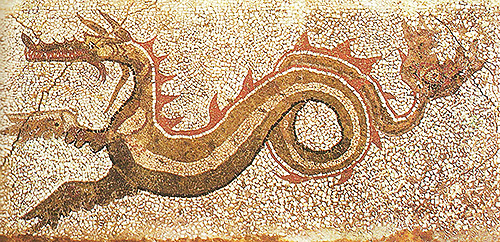
Dragon Rider Problems

File:Reggio calabria museo nazionale mosaico da kaulon.jpg

So this is the bit of the blog where we get to talk about Dragon Riders. Yes! Dragon Riders. In all my time as writer I'm not sure I've found a more popular subject. I think at least half of all the writers I know have included a dragon rider at some point in time. Why? Because of the Rule of Cool. Dragon Riders are awesome, even more awesome then superpowers. After all, what's more awesome then slaying a giant scaly beast? Riding it!

But including Dragon Riders can be incredibly problematic in a novel. It's not an easy trope to pull of well, but a lot of people seem to try anyway. It' ridiculously overpowered, and gives the rider pretty much any of the abilities that a dragon has. If the Dragon is sentient this power is doubled. If the Rider does magic (as so often happens) then the power is quadrupled.  The Dragon (and sometimes the magic) makes the rider near invincible in combat situations.

 I'm not going to go into why you shouldn't put Dragon Riders in your novel. There are reasons, yes, but one, I don't think any of you would hear me over the sound of the sheer awesomeness of Dragon Riders and two ... the idea of a Dragon Rider is one that is so awesome it deserves to live on in glory. Just because the Rider trope is hard to pull of doesn't mean you shouldn't pull it off.

So how do you deal with dragon riders? Well for one you can depower them a bit. Making the Dragon non-sentient helps, also making the rider a non magic user helps. This helps to power down the concept of Dragon Rider and helps smooth is out a bit. If Dragons are sentient in your universe though then you are probably better off having the rider be a magic user. The Rider needs some way to be useful. Swords aren't going to help when you're on a massive flying reptile.

But let's assume that you want you dragon sentient, and by necessity you need the Rider to be useful, thus must use magic. How do you power down such sheer awesomeness like that? The answer is actually quite simple. Either make your dragon rider vulnerable to weak villains or make all the other villains Dragon Riders or something equally powerful themselves.

The former is my favorite option. Normally characters evade your average guards, orcs or whatever weak minion is chasing after your hero has difficultly hurting them. Make your Dragon Rider vulnerable to ordinary things, arrows, swords. Whatever weapons are found in your world. Your Dragon's scales don't have to be hard as iron. They could easily be shot down if they fly low enough. Give them real and realistic vulnerabilities. It gives you more opportunities to torture your characters.

The other alternative is to make your enemies as ridiculously overpowered as your hero is. Perhaps more so. This works as well, though it's not my style, it certainly works.

This all of course assumes the dragon rider is a 'good guy'. If the dragon rider in question is evil ... then nevermind anything I just said. Make him as overpowered as you want.

Saturday, August 3, 2013

Ms. Hansen's challenge.


As some of you may know, I am writing a book with Aubrey Hansen, A summary of which is available here http://aubreyhansen.com/2013/04/announcing-redacted/ . It's going to involve Knights, Theology and Faeries! Now something exciting has happened. Aubrey has issued a challenge for anyone interested. Two people have a chance at becoming Beta Readers for this novel. Now if that doesn't sound like the sort of thing you are interested in by all means stay away! But if you are the type of person who likes to edit and wants to get a glimpse of a soon-to-be-published work you might want to check this out. You can find it here. http://aubreyhansen.com/2013/08/name-that-book-and-win/

I also want to make a note here who don't know her that Aubrey Hansen is an awesome person, friend and co-writer. You should check out her blog! http://aubreyhansen.com/2013/08/name-that-book-and-win/

Can Evil win?

They heard, and were abashed, and up they sprung - Gustave Dore

I have never seen an author, of any of any kind, but especially not a Christian author ever shirk from torturing, killing or otherwise making their characters miserable. By their maniacal laughter it's safe to assume we never mind dumping a little torture on our good characters. It makes them happy ... or at least, it makes us happy and we don't care what they say.

However, when it comes to bad characters it's hard for us to do the inverse. To treat them well and to let them get away with their evil deeds tends to be something we loathe to do. This happens in Christian art especially. We Christians, and not just the most conservative among us, tend to make sure that evil is punished in accordance to the liberality with which it was practiced. This isn't something unique to Christians either, even though the morals are looser in secular fiction, what Seculars consider to be moral is still enforced with the strict moral code unless it's a Modernist/Postmodern drama in which the author is actively trying to point out that morality is irrelevant. 

But do you always need to punish the evil character to show the existence of absolute moral law? This is a difficult question. The answer is No, and Yes. 

The answer is No, because you do not have to have the good guys win and the bad guys lose to show the existence of the moral law. And the answer is yes because Good must always be shown to be ultimately rewarded, even if through pain, fire and loss and evil must be shown to be futile, even if the villain has achieved ultimate victory.

What this means is, yes Evil can win, but ultimately it will be a Pyrrhic Victory. It must be shown to be hollow and empty, where they have sacrificed that which was most human about them. The hero on the other hand may die, but they will die in what Tolkien called 'thorny courage', though the hero went through immense pain and finally died they still did what was right.

It might even possible for Evil to prosper and be happy and for the author still to uphold moral laws. However, this prosperity and happiness must be shown to be temporal while the actions of the good characters must be shown to be eternal. In shot the answer is, yes Evil can win, but it must be punished in the end. And, Good can lose, but it must be given victory in the End.

"The Tyrant dies, his rule ends. The Martyr dies, and his rule begins." - Soren Kirekegaard. 

Friday, August 2, 2013

The Second Commandment and Writing God.

HeadĀ of lioness - Theodore Gericault

"Thou shalt not make any unto thee any graven image, or any likeness of anything that is in the earth above, or that is an earth beneath, or that is in the water underneath the earth. Thou shalt not bow down to them or serve them. For I the Lord thy God am a jealous God, visiting the iniquity of the fathers on the children of them that hate me.  
                                                                             
                                                                             Exodus 20: 4 -6
"

I have heard it said before, and I will most likely hear it said again that authors who include God in their writing, such as John Bunyan or C.S Lewis, have violated the second commandment by including God in their work of fiction. It's a serious charge since the Second Commandment, the commandment God issued to the Israelites to prohibit them from idolatry, is a commandment with a promise of vengeance. It is most certainly not a charge to be leveled lightly, but for the sake of argument, but it's a serious charge and should be taken seriously.

Now looking at the Second Commandment, there is nothing distinguish making an image of God and Idolatry. The two are one and the same. The Lord prohibited the Israelites from worshiping images because the image would draw attention to the creature rather than the Creator. So the question is, is an allegorical character in fiction that represents Christ an image of God?

Well look at the verse. You shall not bow down to them or serve them. The whole purpose is the second commandment is to keep the Jews, and later the Christians from worshiping any other Gods from the Holy Trinity. I believe this includes any substitutes, which include, pictures, statues, icons or any other such things, but that's another subject entirely. However does this include subjects such as God in writing?

Not exactly. In the case of Lewis and Bunyan, they do not write about God himself, but instead make an allegorical representation of him. But wait, isn't Aslan supposed to be to truly be God in the world of Narnia? Well sort of. Lewis never intended Aslan to be worshiped. In that sense the Lion is allegorical because an Allegory is meant of be meant to be to be God in of himself, but rather a word picture to describe something of His Character. They are used many times in scriptures, especially in parables to help describe something of God.

This is a helpful tool for Christian writers because otherwise we would have to avoid the subject of God entirely, and give that our faith is naturally expressive and dominant in all aspects of life that would make it hard to point to Him indeed.

Thursday, August 1, 2013

Food, glorious food.

Cook With Food - Frans Snyders

I asked two of my friends what I should write about for my blog, one said I should talk about writing prompts and the other said I should write about food. So here I am ... writing about food. Because food is tasty and scrumptious. We're going to go mostly into describing food. I thought about touching on the topics of Gluttony and Starvation, but those are really more complicated topics that I will tackle at a different point.

So how does one write about food? Well first, describe it! I have never known readers to complain about too many descriptions of food. They want to know what the characters are eating. This is because if a meal is described, but the food isn't, the reader's first thought it 'yes but what did they eat?'. The reader's stomach's want to know what their characters are eating! Perhaps they want to make some of it for themselves after they put the book down.

But doesn't it distract from the story? This is a valid point and sometimes its right. Sometimes you don't want to describe food because there's something else going on that you don't want to distract from. However this is rarely the case because food is generally not being served at a time when there's a lot of action going on. Usually it's devoured during a time where the character is trying to recuperate and relax.

Also describing food can help accent the nature of the situation. Look to the Chronicles of Narnia. The White Witch gives Edmund Turkish Delights, the lavish, over-saccharine nature of the dish helps capture the sweet, stylish, but unhealthy nature of sinful temptation, this is contrasted by the food of the Beavers, which is simple, plain and healthy.

Remember food can be used to communicate meaning and atmosphere, a grilled cheese sandwich brings to mind such concepts as snacks, the middle class and America. By contrast caviar tends to immediately bring wealth to mind. If you put your character in a dungeon, describing their moldy bread and tepid water helps the reader to understand the filthiness of the character's position.

So those are my thoughts on food ... hmm ... I'm getting hungry...